-
March 25, 1918
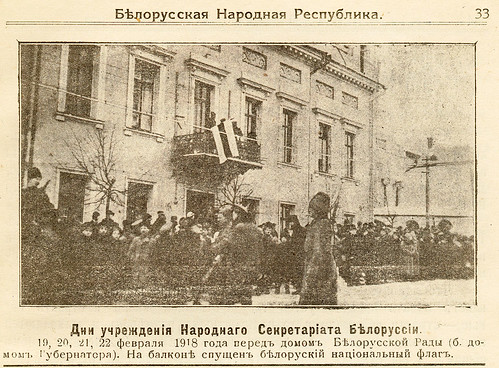 Belarusian National Council, an assembly of different Belarusian political powers, issues a Third Constituent Charter declaring the independence of Belarus under German occupation
-
April 28, 1918
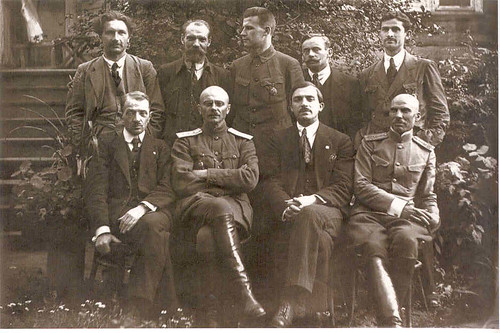 Belarusian language is proclaimed by the Rada the only official language in Belarusian People's Republic
-
1918, June
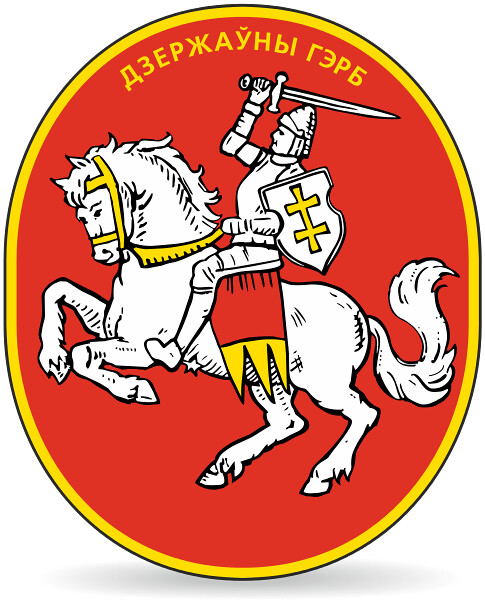 The white-red-white flag and Pahonia, the coat of arms of the Grand Duchy of Lithuania, are adopted national flag and emblem of Belarusian People's Republic
-
October 11, 1918Temporary constitution of Belarusian People's Republic is adopted by government under the Prime Minister Anton Łuckievič
-
1918
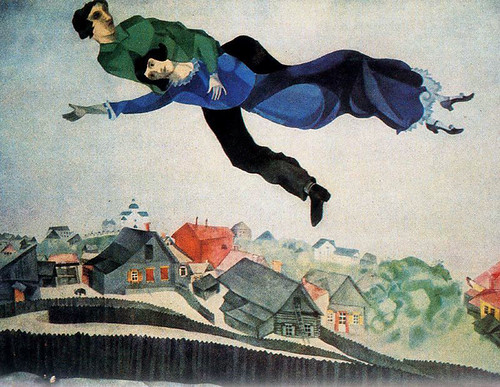 Marc Chagall, a Belarusian-French modernist painter, completes his Cubist work "Over the town"
-
December 3, 1918The Rada of the Belarusian Democratic Republic, today the oldest existing government in exile, moves from Minsk to Vilnius in front of the advancing Red Army
-
December 10, 1918The German army retreat from Minsk, leaving the city to the Red Army
-
January 1, 1919
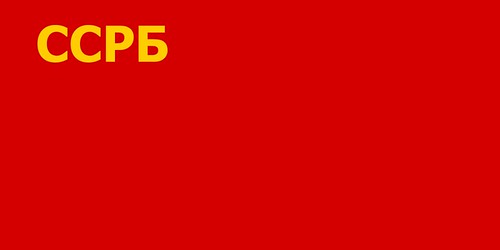 During Soviet westward offensive the Bolsheviks proclaim in Smolensk the puppet Belarusian Soviet Socialist Republic with capital in Minsk
-
January 8, 1919Communist government replaces the government of Belarusian People's Republic in Minsk, occupied by Red Army during Soviet westward offensive
Showing posts with label History of Belarus. Show all posts
Showing posts with label History of Belarus. Show all posts
Monday, November 30, 2015
Belarusian People's Republic

Thursday, July 2, 2015
Teutonic Knights
-
March 5, 1198
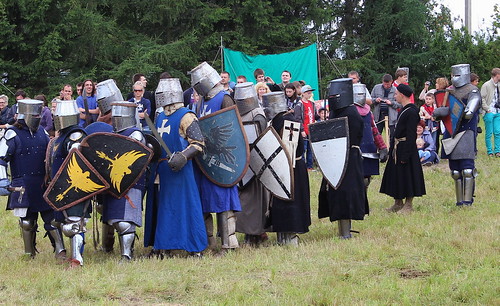 The Teutonic Knights, religious Catholic order, are established as a military order in a ceremony at Acre in Palestine
-
1226, March
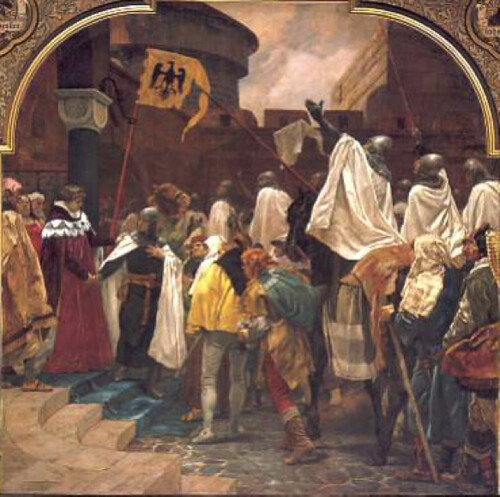 The Golden Bull of Rimini, issued by Emperor Frederick II, authorizes the Teutonic Knights to conquer and convert pagan Prussian tribes in the Baltic
-
December 28, 1233Kulm law, a charter granted settlers civic freedoms, is issued by the Teutonic Knights as a part of their efforts to colonize Prussia
-
April 5, 1242At the Battle on the Ice the Republic of Novgorod under 20-year-old Prince Alexander Nevsky defeat the Livonian branch of the Teutonic Knights halting the Northern Crusades directed against pagans and Eastern Orthodox Christians
-
February 7, 1249Treaty of Christburg forces the pagan Prussian clans to recognize the rule of the Teutonic Knights, establishing German as the dominant culture and language
-
1255Königsberg is founded on the site of the ancient Old Prussian settlement Twangste by the Bohemian King Otakar II, who came to help Teutonic Knights during their conquest of Prussia
-
July 13, 1260Lithuanians defeat the joint forces of the Teutonic Knights from Prussia and Livonian Order from Livonia at the Battle of Durbe during the Livonian Crusade
-
June 1, 1298The people of Riga with help of Grand Duke of Lithuania Vytenis defeat the order in the Battle of Turaida
-
1341The Livonian Order buy the Duchy of Estonia from King Valdemar IV of Denmark
-
February 17, 1370Teutonic Knights beat forces of Grand Duchy of Lithuania at Battle of Rudau
-
1406
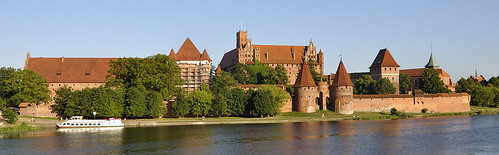 Malbork Castle, the largest castle in the world by surface area, is completed by the Teutonic Knights in Marienburg, the administrative center of the Order in Prussia
-
July 15, 1410Lithuanian-Polish forces defeat the Teutonic Knights at the Battle of Grunwald in Prussia, thereby halting the Knights' eastward expansion along the Baltic and hastening their decline
-
1466Second Peace of Thorn ends the Thirteen Years' War, a conflict between the Prussian Confederation, allied with the Kingdom of Poland, and the State of the Teutonic Order, with win of Prussian Confederation
-
April 10, 1525
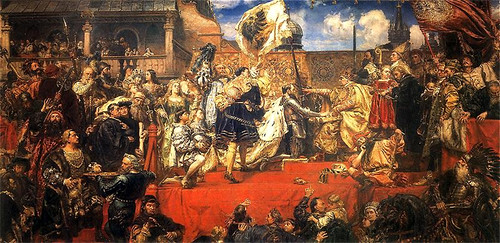 Albert von Brandenburg, a member of a branch of the House of Hohenzollern and the leader of the Teutonic Order, secularizes Order's remaining territories into the Duchy of Prussia and passes the first laws of the Protestant church, making Prussia a Protestant state
-
1809Napoleon strips the Teutonic Knights of their last holdings in Bad Mergentheim in Germany
Subscribe to:
Posts (Atom)